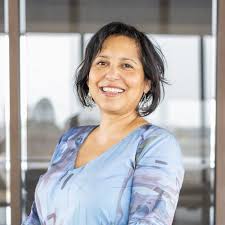
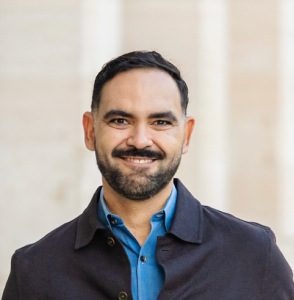
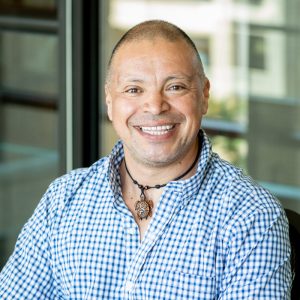
A team focused on transforming education and building local capacity

Our Roots

EcoEducate is a US 501 (c) 3 nonprofit dedicated to transforming education and fostering sustainability in ecologically valuable and fragile islands and coastal areas in Latin America.

Our approach connects teaching and learning with realities in students’ communities in ways that help young people acquire the knowledge, skills, attitudes, and values necessary to shape a sustainable future and understand the interconnectedness of social, economic, and environmental systems.

Our Mission

EcoEducate transforms education in ecologically fragile islands and coastal areas of Latin America by bridging learning to local contexts. We support educators with innovative, experiential strategies to equip students in developing the knowledge, skills, and mindset to build a resilient and sustainable future.

Our Vision

We envision a growing, international network of school communities where dedicated educators collaborate to inspire students through transformative education, deeply rooted in both local and global realities, preparing them to lead sustainable solutions for nature and society. These communities serve as showcases of best practices in action for expanding Education for Sustainability on regional and national scales.

Research-based Principles

Our work reflects a deep commitment to the following research-based principles:

Teachers matter most for achieving high-quality education and positive student outcomes.

Professional development (PD) should be designed in partnership with education authorities and local communities to ensure it complements and doesn’t compete with national, regional and local priorities.

Education that connects learning with students’ daily lives and local and global sustainability principles improves content knowledge, higher-order-thinking skills, and environmental literacy.

PD should help educators master fundamental, research-based teaching strategies (such as planning, classroom management, differentiated instruction, and facilitating learning around driving questions) before tackling more complex approaches, such as project-based and place-based learning.

PD should be designed based on the specific needs and opportunities in a given educational community; one size doesn’t fit all.

PD should help teachers teach the specific subjects and grade levels to which they are assigned.

PD should be intensive, continuous, and connected to practice, involving modeling, teacher observations, and opportunities for teachers to reflect on their evolving practice.

PD should be accompanied by rigorous monitoring and evaluation of its impact on teacher practice and, when feasible, student outcomes.

PD should integrate diversity, equity, and ethics by preparing educators to use inclusive practices, address disparities, and uphold ethical standards to ensure all students receive fair and effective support.

Our Program Team

Our program team has over 40 years of combined experience transforming education in Latin America.

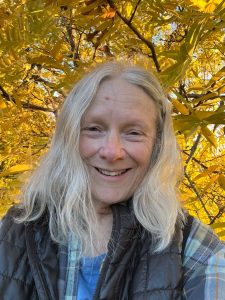
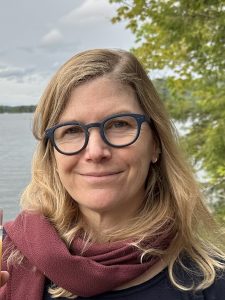
Richard Knab

Founder and Executive Director

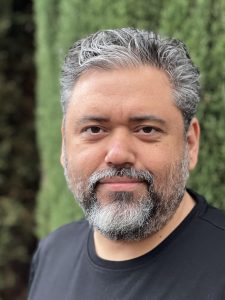
Heny Ágredo

Education Director and Training Facilitator

Miriam Chacon

Coaching Director and Training Facilitator

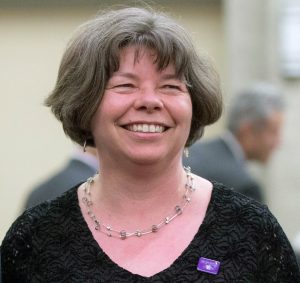
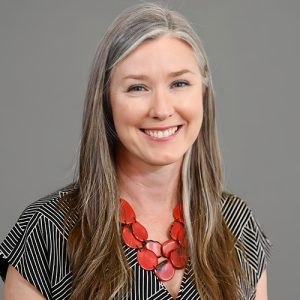
Susan Huss-Lederman

ECO-PBL Director
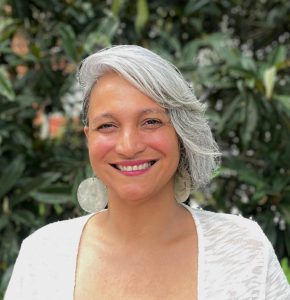
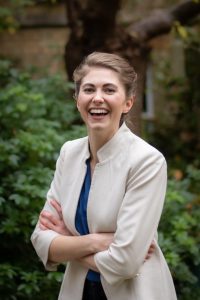
Duraymi Huete Chávez

Duraymi Huete Chávez

Lead Instructional Coach (Galapagos)
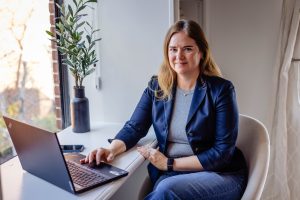
Lori Ulrich

Lori Ulrich

Communications & Marketing Coordinator

Our Board of Directors

Our board possesses decades of knowledge and experience in a variety of sectors, including environmental conservation, international education, and non-profit management.

Our Board of Advisors

Our Board of Advisors is comprised of experienced educators with a deep understanding of education in Latin America. In addition to advising EcoEducate in key areas, such as professional development design and monitoring and evaluation, many of our advisors also participate in program delivery.

More Details

EcoEducate received its 501 (c) 3 designation from the US Internal Revenue Service in May 2023.

Since that time, EcoEducate’s Board of Directors invested in: 1) professional development for 40 Galapagos instructional coaches that serve all 400 teachers who, in turn, serve 7,500 students (through grants to the Galapagos-based Fundación Scalesia) and 2) Technical support in the design and launch of an Education for Sustainability Program in Chile’s Juan Fernandez islands and Isla Mocha for 48 teachers and 313 students from four schools (in collaboration with Fundación Educación 2020, a Chilean nonprofit, and OIKONOS, a US-based nonprofit working in Chile).

For budget or operational details, please contact [email protected]