By Susan Huss-Lederman, Eco-PBL Director at EcoEducate
What happens when teachers plan units where students learn academic content to act more sustainably?
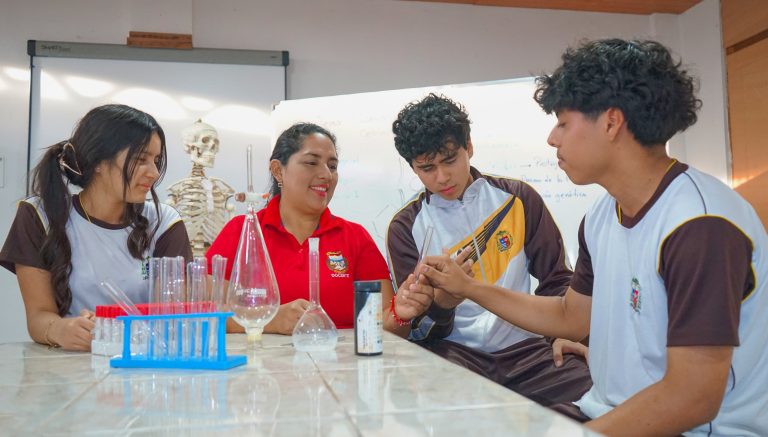
In Eco-Project-Based Learning (Eco-PBL), teachers design units grounded in the core elements of project-based learning, which focuses on students collaborating to address a fundamental question through experiential, hands-on investigation, or project, that results in a publicly-shared product for a specific audience. This approach is promoted by the internationally recognized educational organization PBLWorks.
To further foster students’ understanding of their local environment and how sustainability concerns affect their communities, Eco-PBL incorporates elements of place-based education, as championed by Teton Science Schools. Place-based education (PBE) engages students in interdisciplinary projects that deepen their understanding of how local economy, environment, and culture are interconnected. Students also make local to global connections, identifying the ripple effect of their actions on their community and beyond as well as how events in the wider world weigh on local sustainability concerns. PBL and PBE are similar in that they are both inquiry-based, learner-centered, and incorporate experiential activities. When practiced as Eco-PBL, the combined approach positions students to become environmental stewards of their local communities.
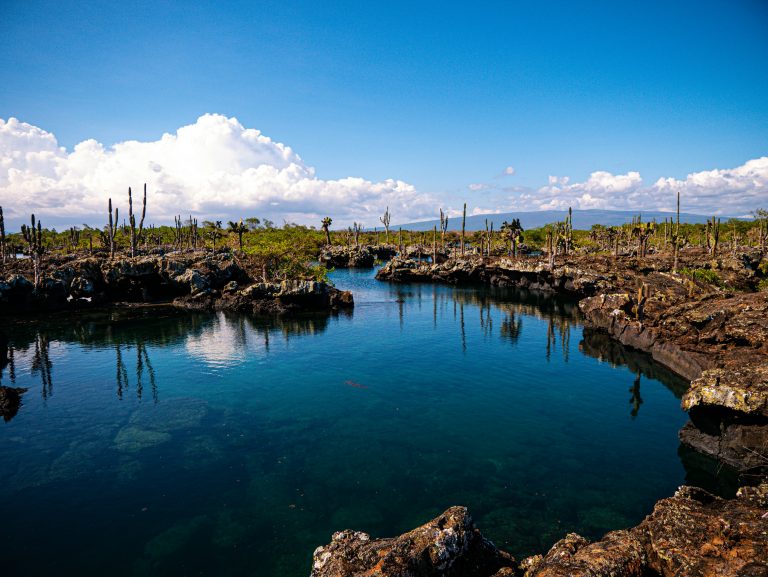
Consider an example drawn from the Galapagos Islands of Ecuador. In middle school, a content standard in the natural sciences requires students to examine the impact of human activity on this unique island ecosystem. A focus of study for this area is the impact of commercial fishing on shark populations, both inside and outside of the Galapagos Marine Reserve. Although students are familiar with sharks and can see hammerheads swimming near the piers, many students only know that they fear sharks, having little understanding of the critical role these animals play in ocean ecosystems.
The topic is ripe for exploration. Teachers design a unit in which students investigate the life cycle of sharks and their place within the ecosystem, how human activity affects shark populations, current policies and fishing regulations, and why it is important for humans to protect these apex predators in the Marine Reserve. The Eco-PBL framework requires students to incorporate what they have learned throughout a project by responding to a research question, and to design a final product for an identified audience. Through engaging in such a process, students may change their stance from originally fearing sharks to wanting to protect them, while recognizing how their local situation connects to the global issue of shark conservation.
Essential components of an Eco-PBL project appear below.
- Entry Event. The entry event’s purpose is to introduce students to a topic or project. For example, students might view a video, compare “before and after” photos, read a news story, or hear a story from a community member.
- Driving Question Inspires a Final Product. The driving question is the research question for the project unit. Linked to the entry event, this question engages students’ curiosity and specifies the goal of the project. It is an open-ended question that cannot be simply answered by citing a fact. In Eco-PBL, we suggest driving questions that follow the following format:How might we, as marine biologists, promote the importance of shark conservation in our community?Here, students are assigned a role, a goal, and an audience. Assigning students a role introduces them to a profession and the habits of mind that such a profession calls for. In this case, the method for promoting the importance of shark conservation is left open. Students can come up with their own creative project ideas to satisfy the goal. For example, they might invite community members to a presentation at their school, local library, or municipal auditorium or prepare a video to share through social media. If integrated with language arts, the students might write and perform a play that creatively informs others about what they have learned and inspires a call to action. Students must be able to express the question in their own words and refer to it throughout the unit.
- Ongoing Inquiry. The more students learn as they focus on responding to the driving question, the more questions they will have. Mounting a wonder wall of questions or keeping a log of project activities and new questions that result from research, are both ways to record, reflect, and research ideas throughout the unit.
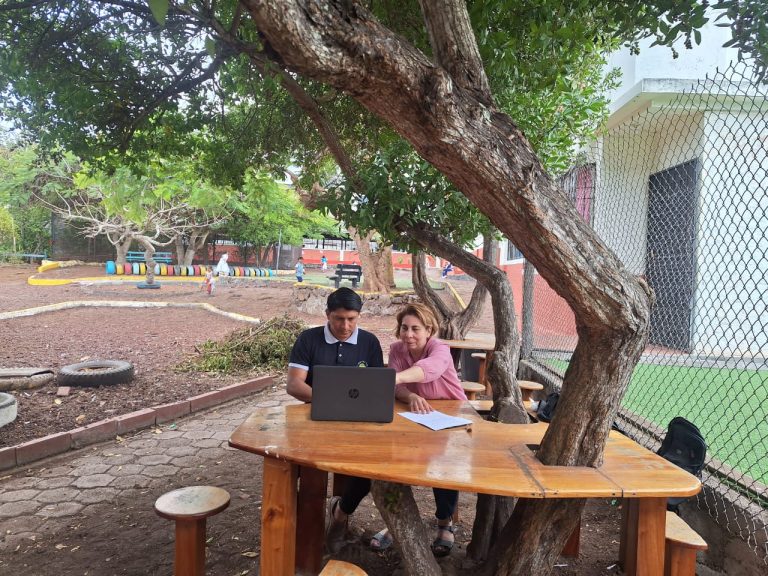
- Community as Classroom. Taking its cue from Place-Based Education, Eco-PBL draws students outside of the four walls of the classroom or the pages of the textbook and into the community to gather information to inform their project. This might be as simple as taking an observational walk or inviting an expert into the learning space as part of the research process.
- Student-Centered. The Eco-PBL approach is student-centered, with the teacher acting as a knowledgeable coach. These four principles are key in the project process:
- Projects must be relevant beyond the classroom and meaningful to the student (Grossman et al., 2019). When planning a unit, teachers also keep the students’ age and developmental stage in mind.
- In teams, students may assume different roles or rotate roles throughout a project. For example, a student who expresses ideas well through drawing might rough out a poster or diagram based on input from the team. Becoming a functional team is not without challenges. Teachers coach teams, asking them to review how they work together, and to identify practices that work and those that they can improve. Learning to work as part of a team prepares students for real life in a future career.
- Reflection and Assessment. Throughout a unit, time is set aside for students to reflect on the content that they learn and their performance as team members. Teachers, too, model reflection as they monitor student work through formative assessment and observation. Project rubrics and corresponding checklists guide students in meeting standards for evaluation.
- Voice and Choice. In an Eco-PBL unit, students share their experiences, opinions, and ideas in a respectful atmosphere. Whenever possible and appropriate, teachers allow students to choose how to proceed in a project, guiding them to make predictions and forecast the results of the decision-making process.
In sum, Eco-PBL is a dynamic approach to education for contextualizing the curriculum to support environmental sustainability practices. Students engage in hands-on learning to explore how their actions can positively impact their community and the environment.
For further reading
Grossman, P., Pupik Dean, C., Kavanagh, S., & Herrmann, Z. (2019). Preparing teachers for project-based teaching. Phi Delta Kappan, 100 (7), 43–48. Retrieved December 31, 2024, from https://tinyurl.com/28wslc34
PBLWorks. (n.d.). PBLWorks: Project based learning for all. Retrieved December 31, 2024, from https://www.pblworks.org/
Teton Science Schools. (n.d.). Place-based education. Retrieved December 31, 2024, from https://www.tetonscience.org/about/place-based-education/