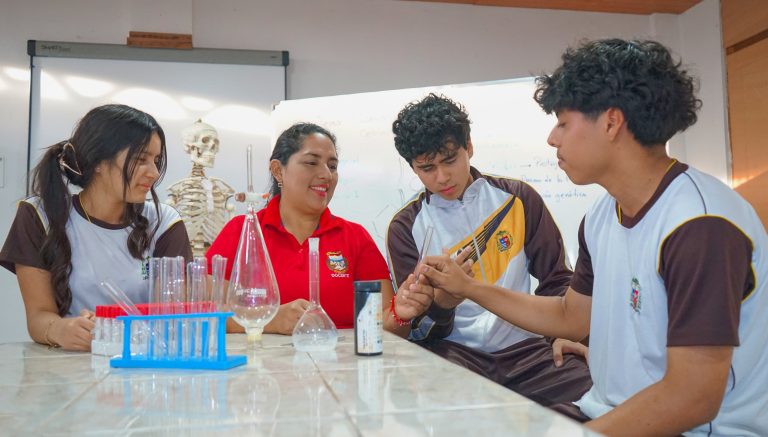
When you’re an English teacher on a remote island in the Pacific Ocean, professional learning can feel very far away. On Isabela Island in the Galapagos Archipelago, that has changed.
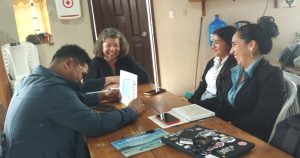
Through a series of hands-on workshops, classroom coaching, and virtual follow-up sessions led by Susan Huss-Lederman, Professor Emerita of the University of Wisconsin-Whitewater, and the team at EcoEducate, English teachers on Isabela have found not only new strategies, but renewed purpose.
Susan explains, “I have truly enjoyed facilitating professional development for English teachers at Jacinto Gordillo and Stella Maris, two PreK-12 schools in Puerto Villamil on the Galapagos island of Isabela. Teachers are well aware of the unique socio-ecosystem in Galapagos, and they recognize how valuable commanding English will be for their students to advocate for sustainability in settings at home and beyond. To this end, English teachers are learning the importance of contextualizing instruction with flexible materials centered on student engagement. We meet online monthly, to share professional concerns and offer new teaching suggestions to try.”
One of the approaches shared with Galapagos teachers is the “Picture Word inductive model” or PWIM, through which students identify what they observe in a picture or photograph. The student-generated vocabulary list then serves as the foundation to introduce grammar patterns. Students use this language in speaking and writing activities. It is easy to find pictures related to Galapagos contexts online for this technique, and it is an ideal entry event for a project-based learning unit. After experiencing PWIM in workshop, a new English teacher commented, “My students enjoyed his first PWIM lesson so much that they did not want to leave English class when the bell rang!”
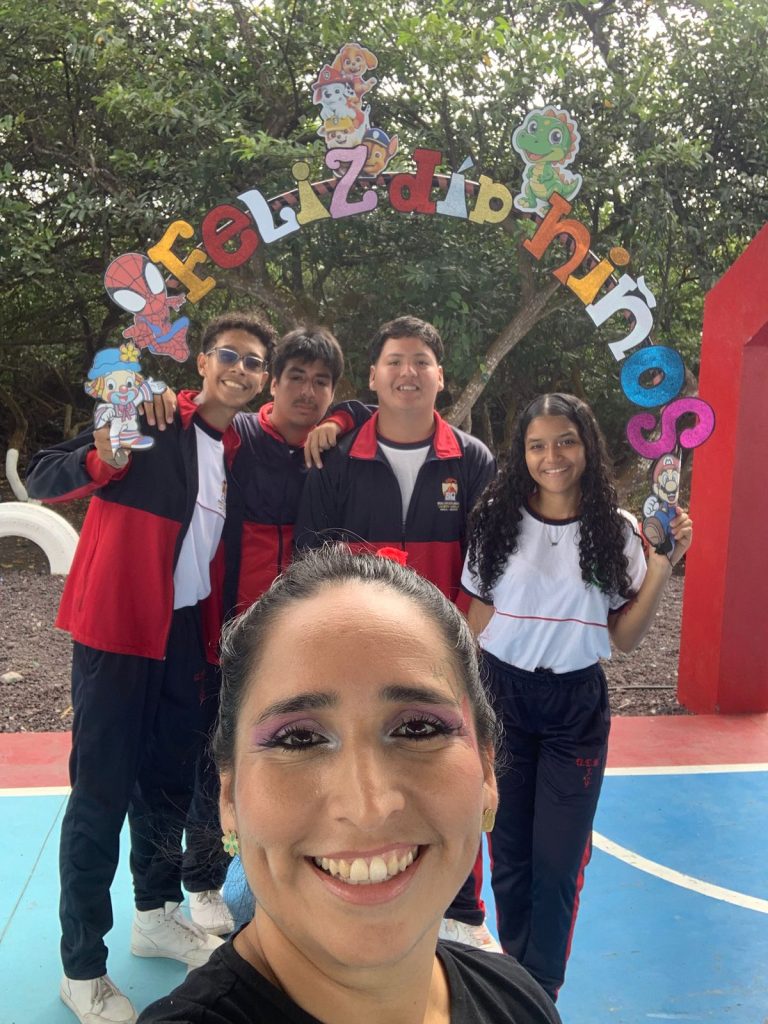
For Lourdes Soledispa of Escuela Jacinto Gordillo, the experience has been both professional and personal. “The workshops helped me reconnect with why I became an English teacher. They gave me practical, meaningful strategies I could use immediately,” she explained. After implementing her new strategies, Lourdes soon saw students speaking more confidently, participating more freely, and expressing real ideas about the special place they call home — in English.
At Unidad Educativa Stella Maris, teacher Jesse Calderón noticed similar gains. Writing workshops introduced “Chalk-Talk” storytelling and “Hamburger paragraph organizers” that helped students structure their ideas. In a Chalk-Talk, students tell the teacher a story while the teacher draws simple pictures, similar to cartoon panels, to illustrate the students’ stories. The teacher captions the pictures with the students’ input. In this way, students practice contextualized, relevant reading and writing. For beginning writers, the Hamburger paragraph is a graphic organizer used to guide students in organizing and planning their writing. It helps them introduce a topic (top bun), include the details (burger and condiments) and conclude (bottom bun). Readers’ Theatre scripts boosted fluency and pronunciation while building teamwork and joy as students perform a story, with some dialogue spoken in unison with gestures. Think of a Greek chorus, but focused on topics of interest to Galapagos youth.
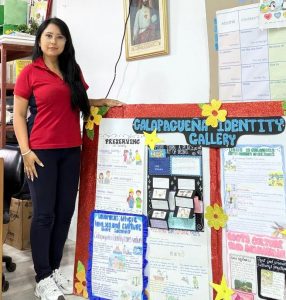
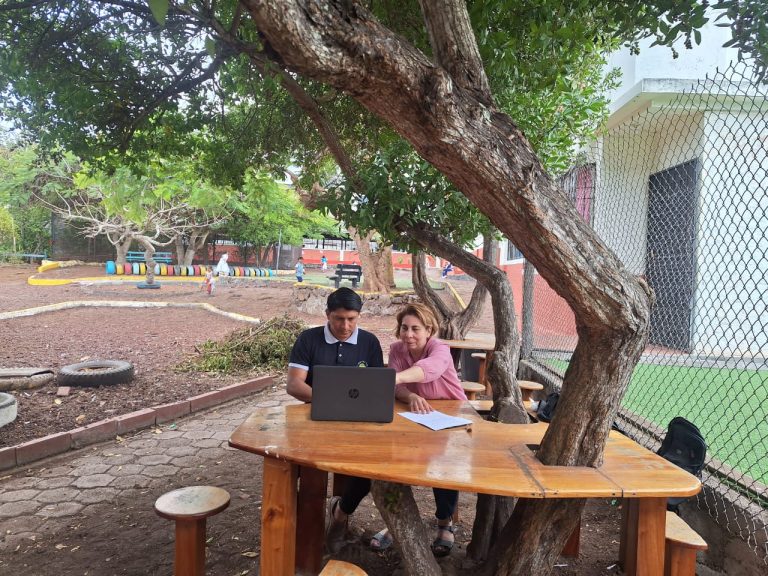
Just as important, both Lourdes and Jesse are now being trained as instructional coaches —teacher-leaders who can model lessons, facilitate workshops, and provide ongoing support to colleagues on their Island. Instead of one-time workshops, Isabela Island now has local educational expertise that can sustain and spread good teaching practices year-round, year after year.
Monthly professional learning circles, conducted online with EcoEducate staff, and teaching resources shared online, continue to strengthen this growing professional community. Galapagos teachers exchange materials, reflect together, and solve challenges collaboratively. As Lourdes explained, knowing they could share resources and continue learning together was very motivating and “made a big difference.”
On Isabela, teachers working together — building shared skills and encouraging confident student voices — are changing English learning for the long haul.