By Richard Knab, EcoEducate’s Founder & Executive Director
A few weeks ago, I received a call from a potential funder excited about hydroponics — an agricultural technique in which plants are grown in indoor, controlled environments with water-based nutrient solutions applied directly to their roots. She was investing in equipment to help school children in Canada and the UK learn about this innovative and sustainable agricultural practice — one that enables faster plant growth with less water, less land, and very little to no soil, while reducing chemical and pesticide use and protecting fragile ecosystems.
Her question was simple:
Would it make sense to implement hydroponic systems in public schools in the Galapagos Islands?
The question immediately brought me back to a conversation I had years ago with Angel Carrión, Director of Cazares High School on Santa Cruz Island. Angel shared a vision of introducing his teenage students to hydroponics — not only to spark young people’s interest in sustainable agriculture, but also to reduce the Islands’ dependence on imported produce. However, he wasn’t just thinking about food security; he was also thinking about BIO-security. Every shipment of vegetables from mainland Ecuador carries a potential hidden danger: invasive insects that threaten the Islands’ unique and fragile flora.
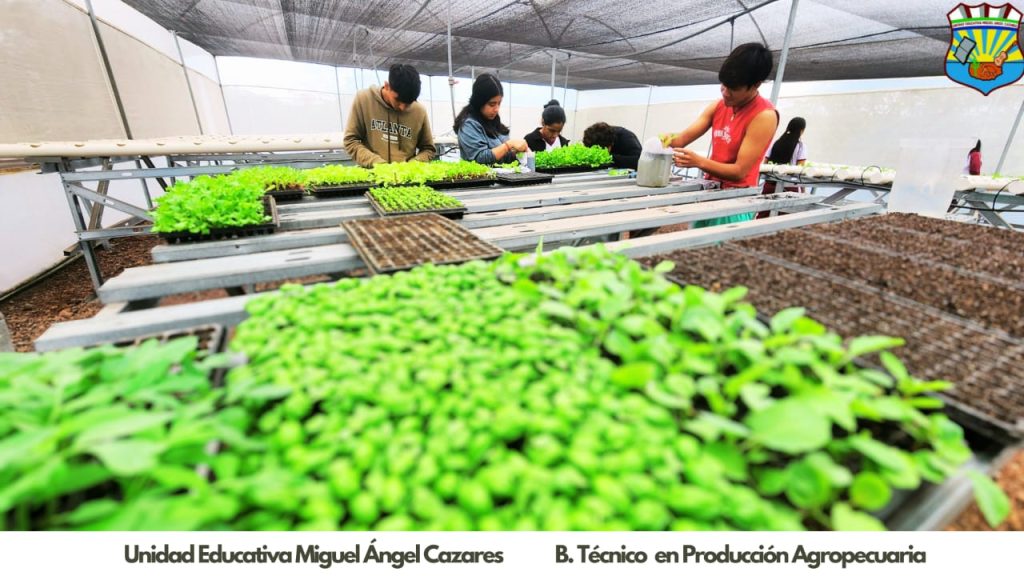
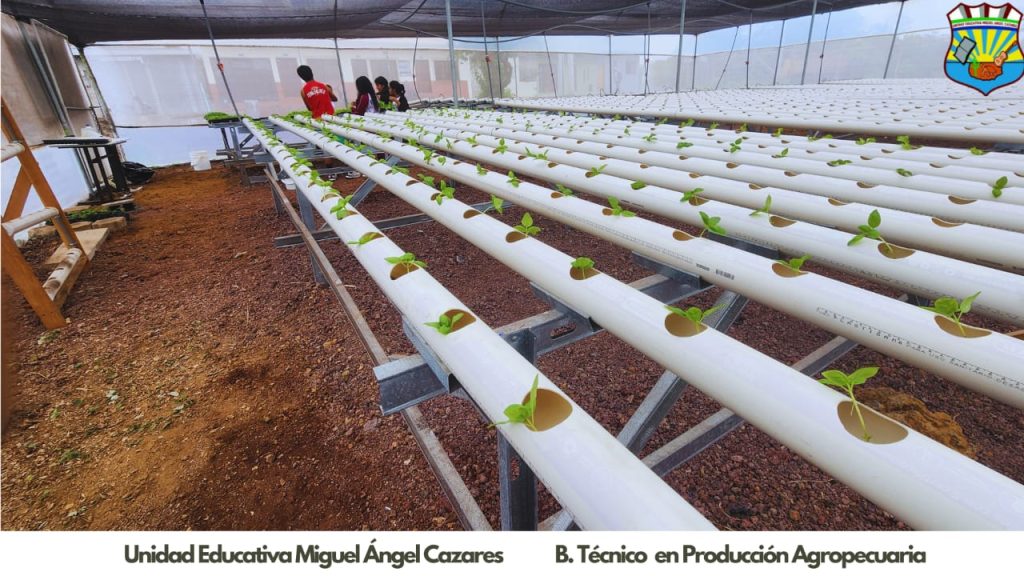
When I recently reconnected with Angel, I was amazed to learn what he and his school community had accomplished. They had raised the funds and built their own 200-square-meter greenhouse, where students now grow basil, lettuce, mint and other high value produce varieties using hydroponic methods.
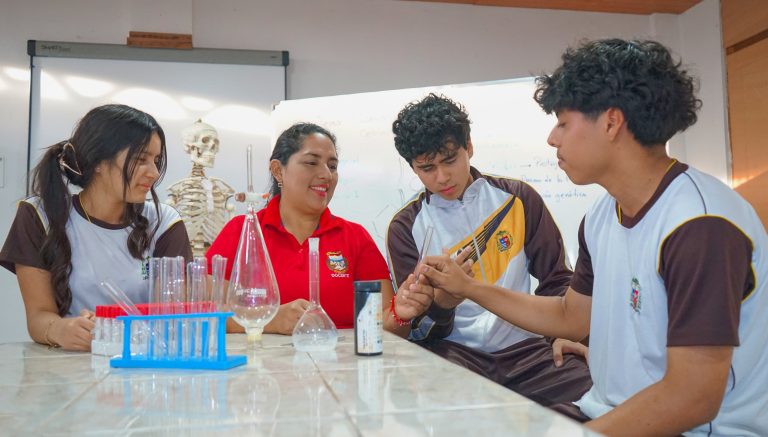
Hydroponics has presented so many new educational opportunities, allowing these students to meet math, science, and business learning standards through a real-world activity that also serves as a model for replication across the Galapagos Islands. Instead of memorizing formulas or abstract concepts, students are carrying out market research, interacting with clients, planning production cycles, mixing nutrients, and calculating profit margins. Every task connects classroom learning to authentic real-world challenges — making education hands-on, entrepreneurial, and directly relevant to their community’s future.
Regarding his experience with the project, a high school junior shared:
“Working with hydroponics has been a huge opportunity. I’ve learned new techniques, practiced teamwork with my classmates, and seen firsthand how quickly and healthily plants can grow. It motivates me to keep pursuing agriculture, because I now know that here in Galapagos we can produce our own food without harming the environment.”
What began as a School Director’s optimistic vision has become a powerful example of how local innovation can align education, conservation, and sustainable livelihoods in one of the most environmentally valuable places in the world!