Project-based learning in action! Students develop “bio-concrete” from recycled oil to solve a pesky problem in Galapagos
EcoEducate is thrilled to share this real-life example of the hands-on, project-based learning described in our recent posts.
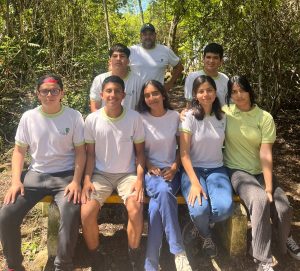
During the first semester of the 2024 school year, a team of seven high school students at the Tomás de Berlanga School in the Galapagos Islands met with their teacher, Xavier Zöller, to brainstorm about how to connect and solve several recurring problems on Santa Cruz Island.
Several students expressed their concern about the many potholes on the island’s roads, which are a recurring problem, especially following the heavy rains associated with climate change. Other students talked about the growing question of what to do with the burnt oil from the cars and trucks on the islands and the fishing and tourism fleets in the Galapagos Marine Reserve. Unfortunately, residents sometimes dispose of the oil in the ocean where it can harm the native sea life, or on land where it can pollute groundwater.
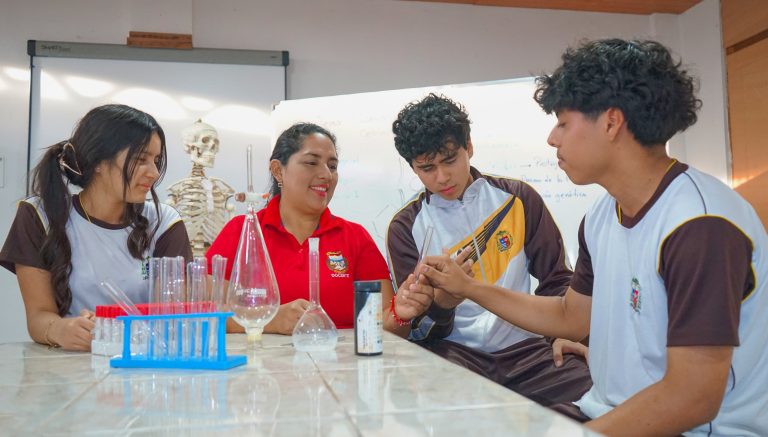
Over the course of the year, these students researched creative ways to recycle burned oils and sawdust by mixing them with sand and cement to create a “bio-concrete” to fill the troublesome potholes that frustrate the community and often result in accidents and damage to vehicles. The students developed their “bio-concrete” formula and conducted initial testing in several locations throughout the community of Santa Cruz.
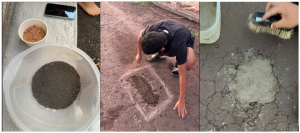
Following a project presentation in late 2024, civil engineers from Ecuador’s Universidad Central were impressed and approached the students, offering to help them conduct rigorous tests of and make possible adjustments to the formula.
“This has been a fun and meaningful way for students to develop math, science, and problem-solving skills while addressing a real-life problem in the community,” explains Professor Zöller. “We look forward to telling you more in the coming months!”
The Unidad Educativa Tomás de Berlanga is a bilingual demonstration school operated by EcoEducate’s partner in Galapagos, the Fundación Scalesia. The school’s teachers participate in EcoEducate-funded initiatives and its teacher-leaders assist in delivering teacher professional development at other schools in the Galapagos Islands.