At the core of EcoEducate’s approach is Instructional Coaching — classroom teacher observations combined with detailed feedback, self-reflection sessions, and goal-setting. Research shows that a well-trained coach can help teachers move from knowing about effective practices to consistently using them — improving instruction, student learning, and teachers’ confidence in their own craft. In the Galapagos Islands, EcoEducate’s work focuses on building a corps of local instructional coaches who can sustain high-quality Education for Sustainability. One of the best, Mirla Cabezas, shares her experiences in our latest Insight.
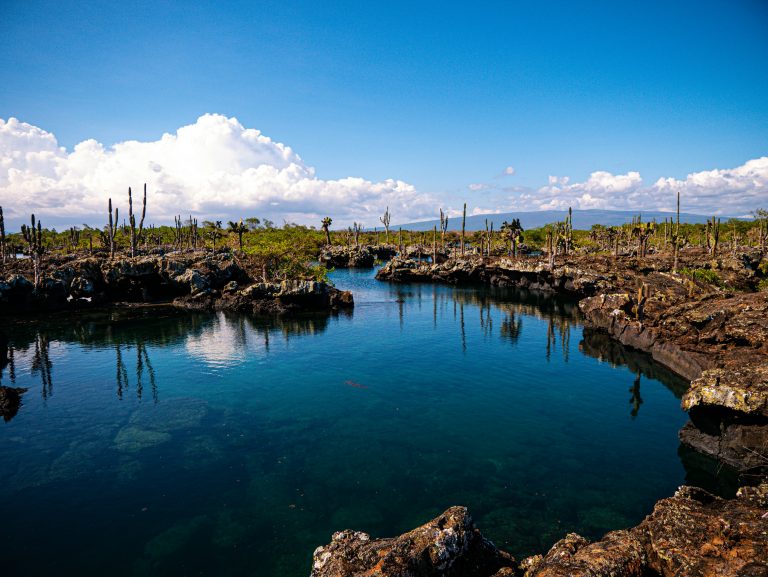
On the island of Isabela in Galapagos, a quiet revolution in education is taking place. In classrooms where the distant silhouette of the Sierra Negra volcano frames the horizon, and the turquoise waters of Puerto Villamil lie just a short walk away, students are learning not just about the world, but through it. On the front lines of this transformation is Mirla Iliana Cabezas Solórzano, a passionate educator, vice principal, and pedagogical coach who has spent nearly two decades teaching, mentoring, and reimagining what education means for young people in the islands.
Mirla’s story is one of steady growth and quiet determination — of a teacher who learned to see change as an opportunity to keep improving and helping others do the same. “When any big change begins, there’s always some uncertainty,” she recalls with a smile. “You wonder if what’s being proposed will really work in your classroom. But once we started trying it ourselves — doing the activities, experiencing the process — I realized it truly is possible. You just have to want to make it happen.”
From Traditional Teaching to Transformative Learning
When Mirla began teaching 18 years ago, traditional and teacher-centered teaching was the norm. Lessons often came straight from textbooks, and teachers worked primarily in isolation. But that began to change when the islands’ educators participated in a pioneering professional development program that brought together teachers from every island in the archipelago.
“It was the first time we came together to share experiences,” Mirla remembers. “We learned new strategies and saw other ways of teaching. More importantly, we realized how powerful it is to connect learning to the students’ own world — their community, the local environment, their friends and families.”
That experience shifted her perspective completely. She began experimenting with more participatory and hands-on lessons, encouraging students to observe, question, and discover meaning for themselves. What started as small classroom changes soon grew into a lasting commitment to contextual, experiential learning.
Becoming an Instructional Coach
A few years later, Mirla was invited to become an instructional coach — a role that meant not only refining her own teaching but also helping other teachers navigate change. “At first, I wasn’t sure I was ready,” she admits. “It’s one thing to adjust your own lessons; it’s another to guide others through the process.”
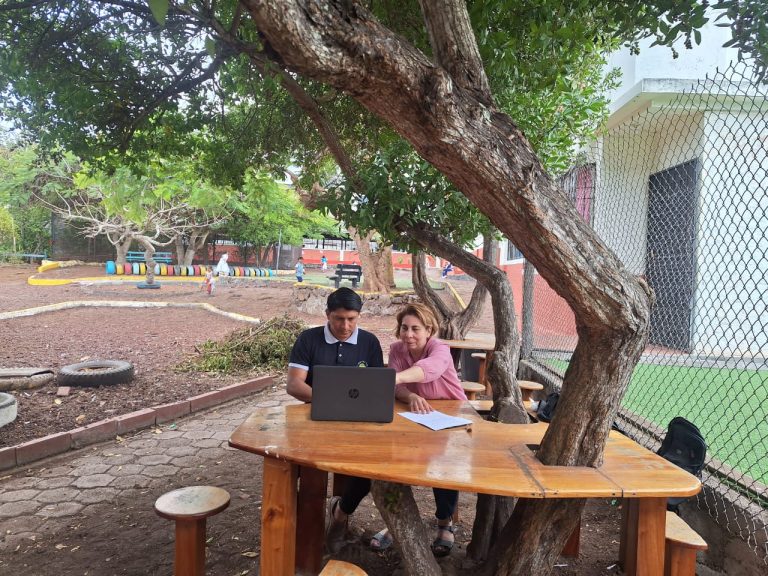
Through EcoEducate, she receives specialized training and has joined a group of experienced educators from across the islands who meet regularly to support each other. Together, they design workshops, model active-learning techniques, and provide classroom coaching to their peers.
“It wasn’t easy to shift habits that had been in place for years,” she says. “But with consistent support and teamwork, things began to move. Teachers began collaborating, planning together, and sharing their successes. Slowly, we began to see that transformation was possible.”
Learning through Experience: A New Way of Seeing the World
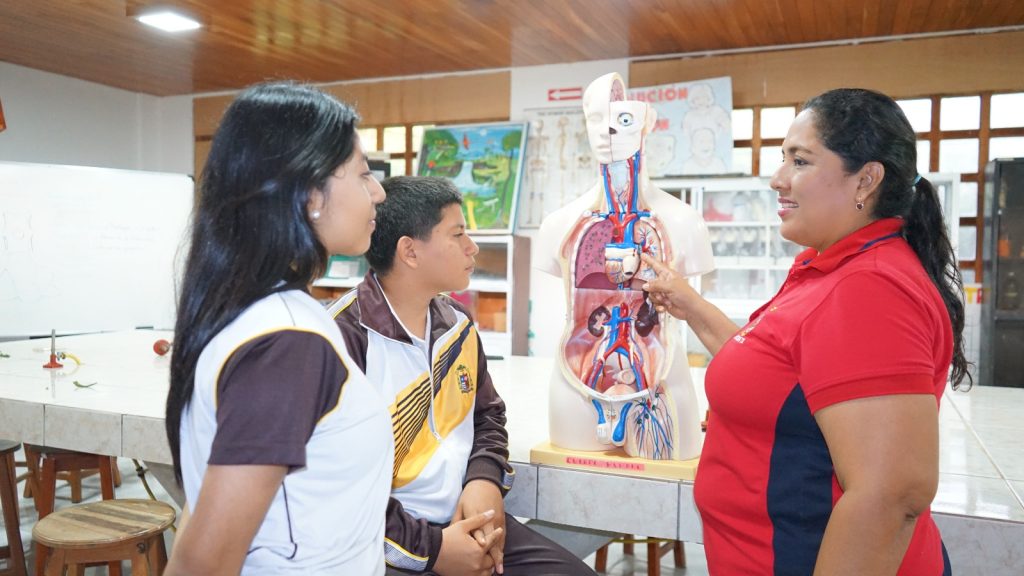
Today, classrooms in Isabela feel more alive and connected to their surroundings. Students work on projects that begin with real-world questions — how to reduce waste, conserve water, or promote sustainable tourism — and apply what they learn in meaningful ways.
“The most rewarding thing,” Mirla says, “is watching students think critically, express their ideas with confidence, and take pride in where they live. Learning becomes real when it’s part of their own experience.”
She shares several examples that make her eyes light up:
- Field explorations, where students leave the classroom to study their environment — measuring water quality, observing wildlife, and interviewing community members
- Community murals that promote environmental protection and remind neighbors of their shared responsibility to the islands
- Bike-ride campaigns to raise awareness about sustainable tourism, designed and led entirely by students
- Local farm visits, where high schoolers propose practical ideas for greener agricultural practices
- Theater projects in which students interview older residents about how water was collected in the past and dramatize those stories to compare past and present
- And a recent songwriting project, where students composed lyrics about justice and equality, giving voice to their hopes for a fairer society.
“Each of these experiences allows students to listen, act, and reflect,” Mirla explains. “They develop empathy, teamwork, and curiosity — and the knowledge they develop stays with them because they’ve lived it.”
Building Change from Within: Mindsets and Collaboration
For Mirla, lasting change in education depends more on mindset than on materials. “The biggest barrier isn’t a lack of resources,” she says thoughtfully. “It’s resistance to change. If teachers aren’t open to learning new things, no amount of training will make a difference.”
She’s learned that patience and collaboration are essential. “At first, some colleagues were hesitant,” she admits. “But through small steps — planning together, observing one another’s classes, celebrating successes — we began to build trust. Once people saw their students’ enthusiasm, everything started to click.”
This collaborative culture now defines much of the work in Isabela’s schools. Teachers share lesson plans, co-teach across disciplines, and organize joint student projects. “We’ve learned that when we work across subjects and grade levels, students make deeper connections,” she says. “They see how everything is linked — from science to art, from the environment to their daily lives.”
Growing Together: Teachers, Students, and Community
The results of this shift go far beyond test scores. Students who have graduated from Isabela’s schools are now thriving at universities on the mainland, confidently discussing topics such as climate change and sustainability — often grounded in examples from their own community. Parents notice changes too: their children come home curious, asking questions, and sharing what they’ve learned about protecting their island home.
Teachers, meanwhile, feel more united than ever. “We’ve become a team,” Mirla says proudly. “We reflect together, celebrate small victories, and help each other overcome challenges. That’s what keeps the momentum going.”
Lifelong Learning for an Evolving Future
Five years into her role as an instructional coach, Mirla still sees herself as a learner. “Education is always changing,” she reflects. “We have to keep preparing ourselves — learning new approaches, exploring technology, and staying flexible.”
She’s quick to credit others for her growth. “I’ve had incredible mentors — people like Miriam Chacón and Heny Agredo from EcoEducate and Fundación Scalesia — who guided and inspired me. They showed me that leadership isn’t about giving orders; it’s about walking beside others.”
Looking ahead, Mirla hopes more teachers will take ownership of the transformation now underway. “My dream is for every educator to feel empowered to keep innovating,” she says. “So our students — the future of Galapagos — can grow into thoughtful, compassionate people who love where they live.”
Looking out at the ocean from her classroom window, she reflects, “Each lesson helps students see their world with new eyes. Little by little, that’s how we build a better future for these islands.”